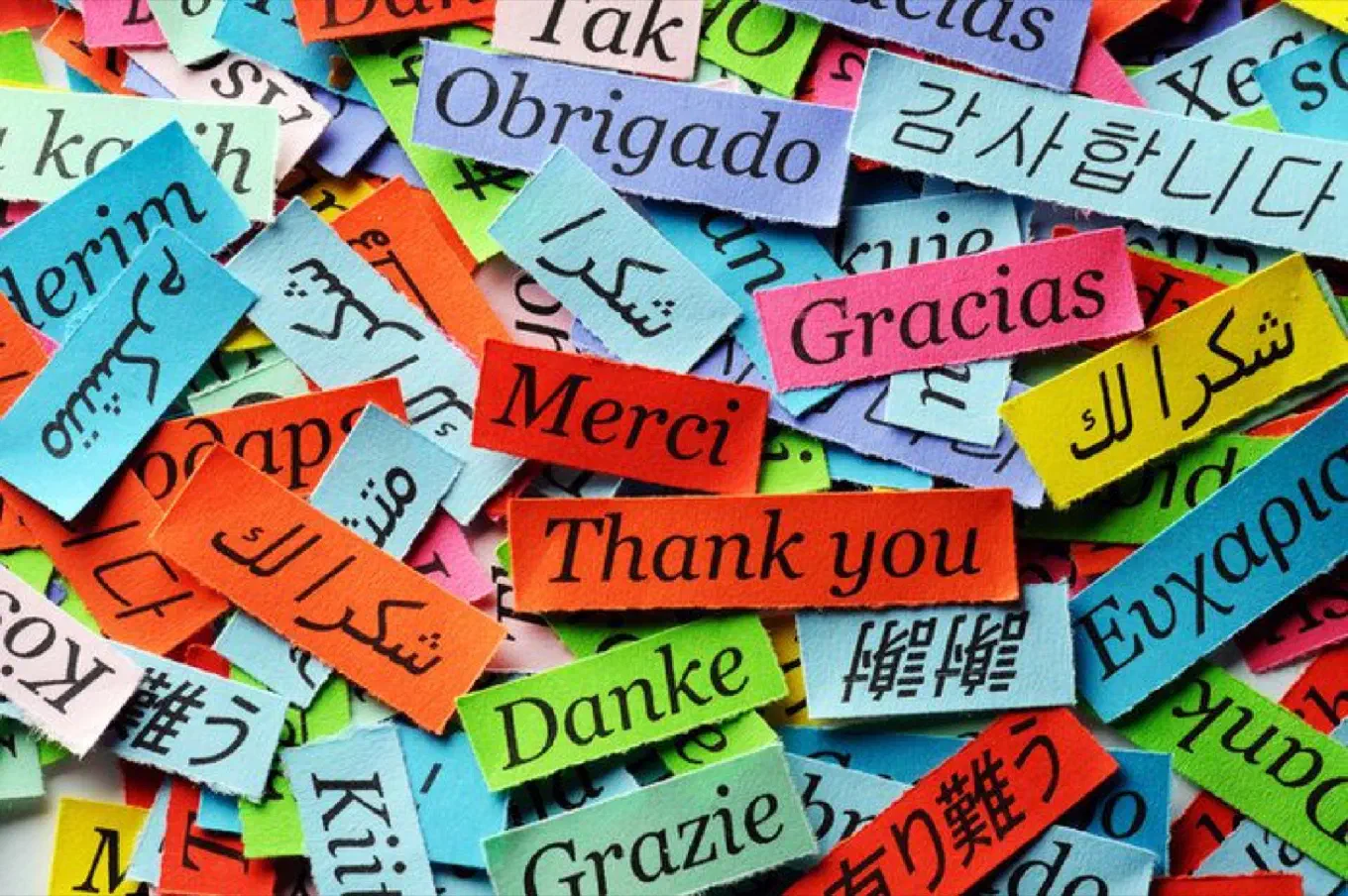
Language immersion works because it forces your brain to stop translating and start processing. Neuroscience research shows this is a physical shift: language moves from declarative memory (conscious recall of rules) to procedural memory (automatic processing), activating the basal ganglia instead of relying on the hippocampus. You do not need to move abroad to trigger this shift. You need the right conditions, applied consistently.
What immersion actually does to your brain
The dominant neuroscience framework for understanding language in the brain is Michael Ullman’s Declarative/Procedural Model, developed at Georgetown University. The model proposes that language depends on two memory systems with distinct neural architecture.
Declarative memory handles vocabulary and explicit grammar rules. It relies on the hippocampus and temporal lobe structures. When you memorize that “ser” means “to be” in Spanish, or that German puts verbs at the end of subordinate clauses, you are encoding declarative knowledge. This is conscious, effortful, and slow.
Procedural memory handles grammar processing, morphology, and automatic language production. It relies on the basal ganglia, cerebellum, and Broca’s area in the frontal cortex. When a native speaker conjugates a verb without thinking, they are using procedural memory. This is unconscious, fast, and feels like instinct.
Here is the critical finding: adult second language learners start in declarative memory. They consciously apply rules they have memorized. But with sufficient exposure and practice, processing gradually shifts to the procedural system. fMRI studies have confirmed this. A study published in PLOS ONE found that as immersion increased, activation in the left inferior frontal gyrus (part of the procedural network) increased for regular morphological processing. The left caudate nucleus, another basal ganglia structure, showed greater activation as proficiency grew.
This is not metaphorical. The brain physically reorganizes how it handles the language. Declarative processing is like looking up a word in a dictionary every time you need it. Procedural processing is like knowing where the light switch is in your own home.
Why living abroad works so fast
Study abroad research shows consistent results. In a study comparing semester-long programs, 89% of study abroad students improved at least one proficiency level on the Oral Proficiency Interview, compared to 44% of students studying the same language at home. Some students improved two full levels in a single semester.
But the research also shows that geography is not the mechanism. The mechanism is a combination of three factors:
Forced output. When you live abroad and cannot communicate in your native language, you must speak. Merrill Swain’s Output Hypothesis, developed from observations of Canadian French immersion students, demonstrated that comprehensible input alone is not enough. Those students achieved near-native comprehension after years of French immersion schooling, but their production lagged significantly. They understood everything but could not produce accurately. The missing piece was pushed output: being forced to formulate sentences, notice gaps in your knowledge, and test hypotheses about grammar in real time.
Volume of contact hours. The Foreign Service Institute estimates that a native English speaker needs 600 to 750 classroom hours to reach professional proficiency in Category I languages (Spanish, French, Italian, Portuguese, German). Category IV languages (Arabic, Mandarin, Japanese, Korean) require approximately 2,200 hours. Living abroad provides 10 to 16 hours of daily exposure. A traditional classroom provides 3 to 5 hours per week. The math explains the speed difference.
Emotional and social stakes. You need to order food, ask for directions, resolve a billing problem, make friends. The language carries real consequences. This activates deeper encoding. Research on context-dependent memory shows that information learned in emotionally relevant situations is retained more durably.
The interaction problem
Michael Long’s Interaction Hypothesis adds another dimension. Language acquisition is not just about receiving input or producing output. It is about negotiating meaning with another person. When communication breaks down and you ask for clarification, rephrase, or confirm understanding, you are engaged in the exact cognitive process that drives acquisition.
This is what a textbook cannot provide. And it is what distinguishes living abroad from merely consuming foreign media. In a conversation, you receive immediate feedback. You notice gaps. You adjust. The cognitive loop of production, feedback, and repair is where procedural learning happens fastest.
How to build immersion at home
If the active ingredients of immersion are contact hours, forced output, interaction, and emotional relevance, then the goal is to recreate those conditions systematically.
1. Maximize contact hours through environmental design
Change your phone, computer, and apps to the target language. This is low-effort and produces consistent passive exposure. You already interact with your phone dozens of times per day. Each interaction becomes a micro-exposure to vocabulary in context.
Watch television and film in the target language. Research shows that if you know the most frequent 3,000 word families and watch at least an hour daily, significant incidental vocabulary acquisition occurs. Use target-language subtitles, not English subtitles.
Listen to podcasts and radio during commutes, cooking, exercise. This builds comprehension and listening stamina. The input should be comprehensible. Krashen’s principle holds here: material slightly above your current level (i+1) drives acquisition better than material you cannot parse at all.
2. Force output daily
The most common failure mode of at-home language learning is avoiding production. You feel comfortable consuming because it does not expose your mistakes. But the Canadian French immersion research proved that years of input without output produces lopsided skills.
Self-talk in the target language is a researched technique. The academic term is soliloquizing. Studies show it promotes oral fluency in unscripted speech by engaging the same production mechanisms as conversation. Narrate your day. Think through problems in the target language. Describe what you see.
Write daily. A journal entry, a message, a social media post. Written output forces you to confront grammar gaps just as speaking does.
3. Prioritize interactive conversation
This is the hardest component to replicate at home, and it is the most important. Passive input builds comprehension. Output builds production. But interaction builds both simultaneously, while adding the feedback loop that enables procedural learning.
Mintza was built to solve this specific problem. It is an AI voice conversation teacher that provides the interaction component: you speak, it responds, it corrects without breaking the flow, and it adapts to your level in real time. It switches to your native language when you are stuck, then returns to the target language once you recover. This replicates the negotiation of meaning that Long identified as central to acquisition.
The research supports this approach. A 2025 meta-analysis by Lyu, Lai, and Guo analyzed 31 studies and found that chatbots produce a medium effect size (g = 0.608) on second language learning. The effect was larger for generative AI systems than for rule-based chatbots. A separate study in Nature Humanities and Social Sciences Communications found that AI conversation bots effectively reduce speaking anxiety and enhance speaking skills.
The advantage of AI conversation is not that it replaces human interaction. It is that it removes the scheduling, cost, and anxiety barriers that prevent most learners from speaking daily. When you can start a conversation in 10 seconds with no appointment, you speak more. Frequency is what converts declarative knowledge to procedural skill.
4. Distribute practice across the day
A meta-analysis in educational psychology found that distributed practice produces a moderate effect (d = 0.54) over massed practice. For language specifically, daily sessions with intervals outperform weekend marathons. The brain consolidates during rest periods between sessions.
The ideal structure: morning input (reading or listening), midday conversation or output practice, evening media consumption. Three touchpoints per day, each 20 to 30 minutes, produces the distributed repetition that strengthens procedural encoding.
5. Create emotional stakes
The reason immersion abroad works partly comes from necessity. You can approximate this by creating contexts where you need the language: joining an online community that operates in the target language, following a hobby where the best resources are in that language, or setting a concrete goal like giving a presentation or writing an article.
The timeline
The FSI estimates assume intensive classroom instruction with trained teachers. But the underlying principle is contact hours. Whether those hours come from a classroom in Arlington, Virginia or from a self-built immersion system at home, the brain does not distinguish. It counts exposure and practice.
For Category I languages (Spanish, French, Italian, Portuguese): approximately 600 to 750 hours to professional proficiency. At one hour of active practice per day plus two hours of passive exposure, this is roughly 8 to 10 months.
For Category III languages (German, Russian, Hindi): approximately 1,100 hours. At the same daily commitment, roughly 12 to 15 months.
The variable that accelerates or decelerates this timeline is not talent. It is the ratio of active output to passive input. Learners who spend most of their time consuming without producing progress slower. Those who speak daily, even briefly, activate the procedural system earlier.
The system
Immersion is not a place. It is a set of conditions: high contact hours, forced output, interactive feedback, and distributed practice. Geography provides these automatically. Without geography, you provide them deliberately.
The structure that works:
- Environmental layer. Phone, apps, and devices in the target language. Background media. This runs passively with no willpower cost.
- Input layer. 30 to 60 minutes daily of comprehensible content. Podcasts, shows, books at your level. This builds vocabulary and comprehension.
- Output layer. Daily speaking and writing. Self-talk, journaling, voice conversations with Mintza. This forces the declarative-to-procedural transition.
- Interaction layer. Conversations where meaning is negotiated. This is where acquisition accelerates. AI conversation tools, language exchange partners, or tutors.
The brain does not care where you are. It cares what you do, how often you do it, and whether you are forced to produce. Build the system. Run it daily. The neural shift will follow.
Mintza is available for iPhone, iPad and Mac and Android.